 BeachFinder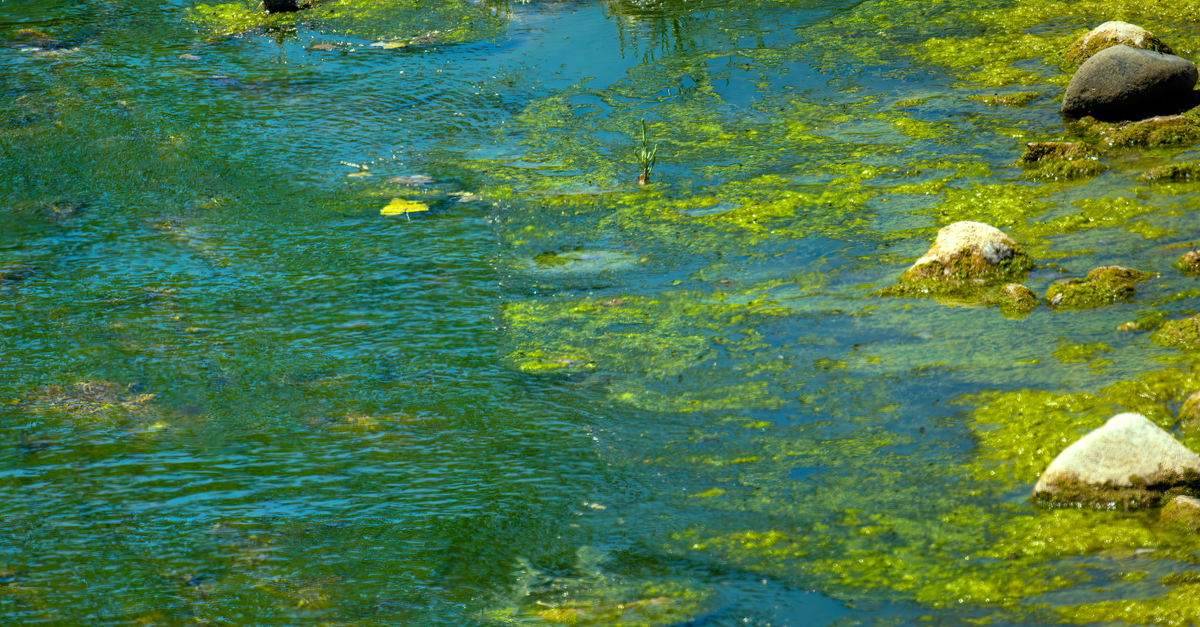
What is a cyanobacterium?
Cyanobacteria, often called "blue-green algae", are not true algae but photosynthetic micro-organisms that occur naturally in fresh water. In small numbers they are harmless. The problem comes from their massive proliferation, known as a "bloom", when their numbers explode within a few days.
This phenomenon happens mostly in summer, when several conditions come together: warm water, a calm and stagnant body of water, strong sunshine and an excess of nutrients (nitrogen and phosphorus from agricultural fertilisers, domestic discharge or organic matter). Some species produce cyanotoxins, which is where the real risks to human and animal health come from.
How to spot them visually
A bloom is often visible to the naked eye. Look for these signs:
- Water that takes on an abnormal green, blue-green, turquoise or sometimes reddish tint;
- A "soup", pea-soup or spilled-paint appearance on the surface;
- A film, clumps, filaments or scum building up on the surface, especially along the downwind shore;
- Cloudy water where you can no longer see your feet in shallow depths;
- Sometimes an unpleasant musty or stale smell.
A simple test: dip a stick or a clear jar into the suspect water. If it's green and grainy like paint, be wary. Be careful, though: appearance never guarantees the absence of toxins, but any abnormal look should make you give up on swimming.
The risks to health
Contact with or ingestion of contaminated water can cause skin and eye irritation, headaches, nausea, vomiting, abdominal pain and digestive upset. In more severe cases, liver or nervous-system damage has been described. Symptoms usually appear within hours of exposure.
Children, who more easily swallow water while playing, are more exposed than adults. If symptoms appear after swimming in suspect water, rinse off, stop all exposure and see a doctor, mentioning the water contact. Also warn the site manager, as this helps trigger inspections.
A major danger to dogs
Dogs are particularly at risk, far more than humans. They drink water at the shore, roll in the mud and then lick their toxin-laden coat. Serious poisonings, sometimes sudden and fatal within hours, are regularly documented after a swim in contaminated water.
Warning signs in a dog include vomiting, diarrhoea, tremors, excessive drooling, weakness or seizures. Keep your dog on a lead near suspect banks, don't let it drink or swim in green water, rinse it thoroughly with clean water if it has been swimming, and see a vet urgently at the slightest symptom.
When and where blooms appear
The risk season runs mainly from late spring to autumn, peaking in summer. Prolonged heatwaves, with no wind or rain, are the most favourable: the water stagnates, warms up and loads with nutrients. A bloom can appear within a few days and drift with the wind from one shore to the other.
The most affected bodies of water are shallow, calm lakes and ponds surrounded by farmland or domestic inputs. Large lowland reservoirs are exposed to it, as are some enclosed bays of larger lakes. Conversely, a cold mountain lake, stirred by the wind, is far less affected.
What to do before swimming
- Check local alerts and orders (health authority, town hall, site manager) before you set off;
- On site, look for signs prohibiting or advising against swimming;
- Avoid areas where the water looks cloudy, green, or covered in scum, especially the downwind shore;
- Don't let children or dogs drink or paddle in suspect water;
- Rinse off with clean water after swimming and watch for any symptoms in the following hours;
- When in doubt, give up: better to change bodies of water than take the risk.
A source of up-to-date conditions helps you decide: on BeachFinder, the community can report the real state of a body of water, in addition to official inspections.