 BeachFinder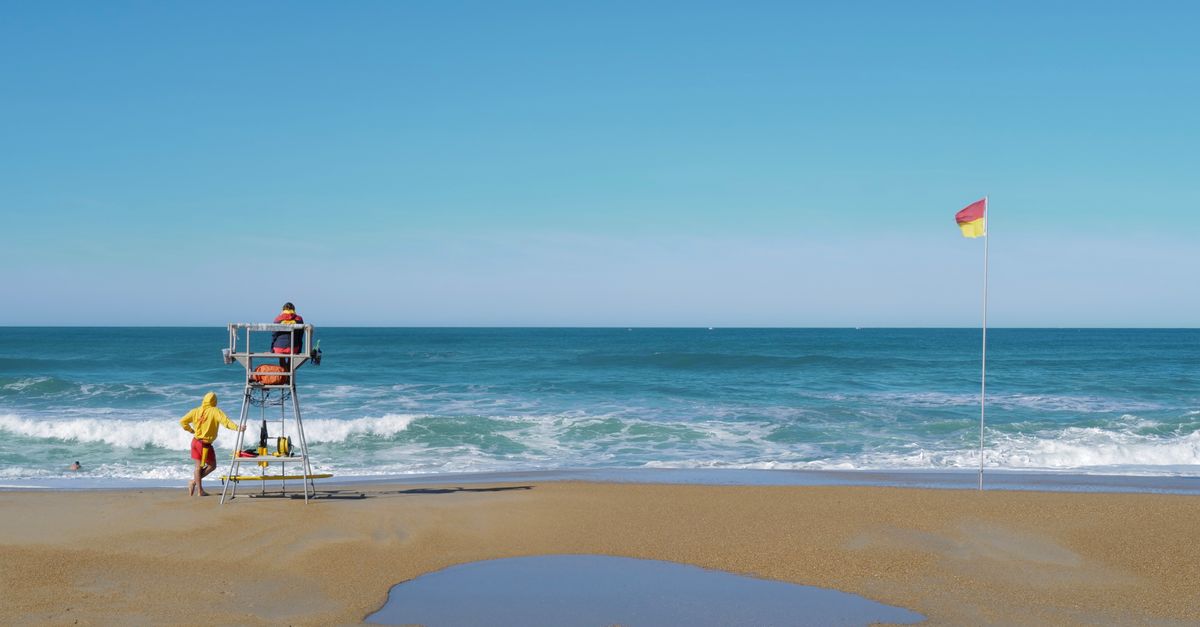
The colours and what they mean
The flag system lets you tell at a glance the state of swimming on a supervised beach. Here's the reference guide:
| Flag | Meaning | What to do |
|---|---|---|
| Green | Supervised swimming, no particular danger | Swim in the marked area |
| Yellow / orange | Dangerous but supervised swimming | Take care, stay near the shore |
| Red | Swimming banned, serious danger | Do not swim |
| Purple | Polluted water or a risk from marine life | Avoid the water, find out more |
| No flag | No supervision in progress | Swim at your own risk |
These flags usually fly near the lifeguard stations and mark out the supervised swimming area, indicated by buoys or pennants.
The green flag
Green means the beach is supervised and that conditions pose no particular danger at that moment. It's the go-ahead to swim in the marked area.
Be careful, though: "supervised" doesn't mean "risk-free". Stay within the marked-out perimeter, keep a constant eye on children and remember that conditions can change. The flag can turn yellow, then red, in the same day if the sea builds or the wind picks up.
Yellow, orange and red
Yellow (or orange depending on the beach) signals dangerous but still supervised swimming: choppy sea, current, sustained wind. You can swim with heightened caution, staying near the shore and not venturing out. Weaker swimmers and children should refrain or stay in very shallow water.
Red means swimming is banned: the danger is judged too great (heavy swell, violent currents, storm, serious pollution). Ignoring a red flag puts your life at stake and makes the lifeguards' job harder, as they then have to intervene in difficult conditions. When it's red, no one swims, whatever their level.
The purple flag and no flag at all
Purple warns of a risk linked to water quality or the presence of marine organisms: pollution, jellyfish swarms, potentially dangerous wildlife. It can be raised on its own or alongside another coloured flag (for example green + purple: swimming possible but jellyfish reported).
Finally, no flag means no supervision is in progress. Outside service hours (often in the evening) or out of season, no one is watching: swimming is then entirely your own responsibility. Don't take the absence of a flag as permission: it simply means there are no lifeguards.
Where and when supervision applies
Supervision has limits you need to know to avoid nasty surprises:
- It only covers the marked area in front of the lifeguard station, not the whole beach.
- It has set hours: typically during the day in summer, often interrupted at lunchtime and in the late afternoon.
- It is seasonal: many beaches are only supervised in July and August.
- Outside these windows, the beach remains accessible but without a lifeguard.
Swimming in the supervised area, during service hours, remains the simplest way to reduce the risk of drowning.
The right habit before you swim
Take thirty seconds when you arrive: locate the lifeguard station, the flag colour and the limits of the supervised area. Swim within that perimeter, during supervised hours, and adapt if the flag changes during the day.
Add the basic precautions: enter the water gradually, don't overestimate your stamina, beware of rip currents, and never leave a child unsupervised, even under a green flag. To plan ahead before you even set off, check the day's sea and wind conditions — that's what BeachFinder brings together spot by spot, alongside the flags posted on site.