 BeachFinder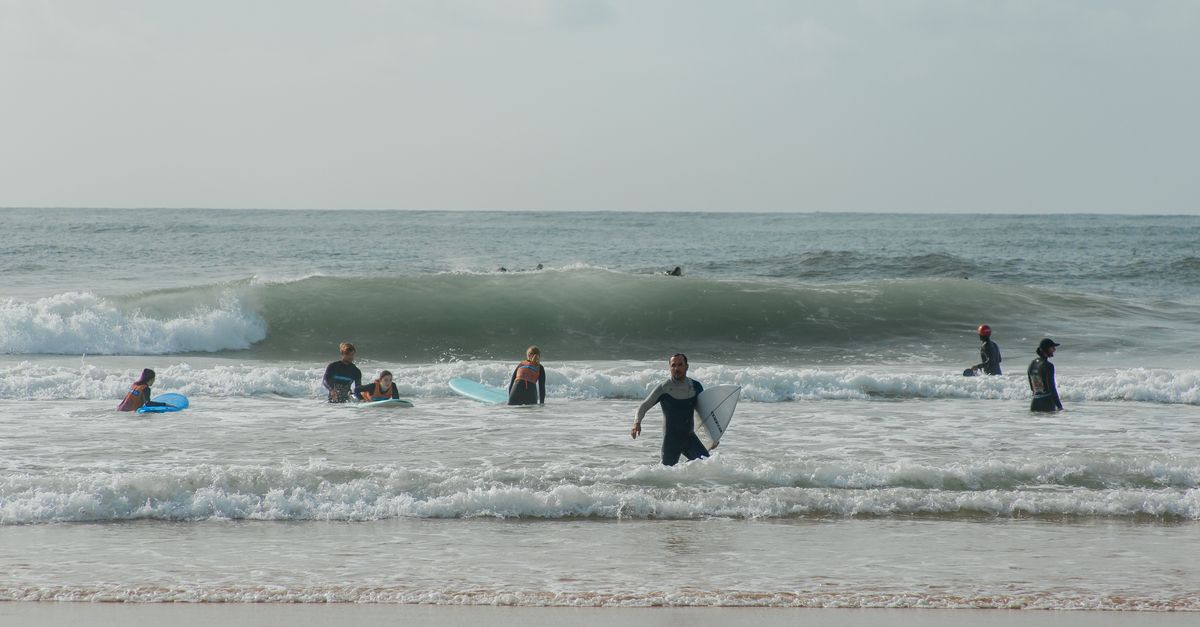
1. The right board: foam and volume
Forget the short board the pros ride in the videos. For a beginner, what matters is volume and stability: a foam board (soft-top) that's wide, thick and long. It floats better, forgives placement mistakes, paddles easily and hurts far less in a collision — for you and for everyone else. The fiberglass ride ("hard board") comes later, once you can stand up on shaped waves.
Simple rule: the heavier or more of a beginner you are, the more length and volume you need. Here are some starting benchmarks, to adjust for your build and fitness:
| Build / profile | Recommended length | Board type |
|---|---|---|
| Child / lightweight teen | 6'0 to 7'0 | Mini soft-top foamie |
| Light-to-medium adult | 7'0 to 8'0 | Foam funboard |
| Heavy adult or tall beginner | 8'0 to 9'0 | Foam longboard / minimal |
Rent before you buy: schools and shops lend gear suited to you, which saves you from a bad purchase.
2. The right spot: a gentle beach break
Look for a sandy beach (a beach break) rather than a reef spot (reef break). A sandy bottom is far more forgiving in a fall: on coral or rock, even a simple wipeout can cut you. Aim for a shallow area where you can stand, with waves that break gently and easy access to the water.
- Avoid spots known for power (hollow waves, big barrels): they're for the experienced.
- Avoid the crowd: in a packed line-up you get in others' way and take pointless risks.
- Favor a patrolled beach and surf in the zone set aside for surfers (often marked with flags), away from the swimmers.
- Spot the currents before you go in: a calmer, darker patch of water between two zones of breaking waves can be a rip current (more on that below).
3. Start in the whitewater
The whitewater is the wave that has already broken and rolls in white toward the shore. That's where you learn, and nowhere else at first. You don't need to go out to the line-up (the zone farther out where you wait for waves that haven't broken yet) until you have several sessions under your belt.
The move: stand where you can touch the bottom, point the board perpendicular to the beach, nose toward the sand. When some whitewater comes, lie down well centered, take a few paddle strokes to match its speed, then stand up. Repeat, over and over: every piece of whitewater you catch is a rehearsal of the take-off and the pop-up. Between waves, walk yourself back to the shore and start again.
4. The three basic moves: paddle, take-off, pop-up
All of beginner surfing comes down to three moves you repeat until they're automatic:
- Paddling: lying down, well centered on the board. Too far forward and the nose dives ("nose-dive"); too far back and the board drags and you go nowhere. The nose should sit just above the water, a few centimeters up. Sink your arms in fully, with a long, steady stroke.
- The take-off: this is the moment you feel the wave push you. Paddle hard before it catches you so you match its speed, otherwise it slides right under you.
- The pop-up: going from lying down to standing in a single motion. Hands flat under your shoulders, push up like a press-up, and let your feet slot in under your body (one forward, one back), eyes looking ahead, knees bent, weight centered. Don't put your knee down: it's a hard habit to unlearn later.
Practice the pop-up on the ground, on the sand, before you get in the water: ten dry pop-ups are worth half an hour of fumbling in the waves.
5. The wetsuit and the small gear
On the Atlantic and the Channel, the water is cool for much of the year: a neoprene wetsuit is almost always necessary. It protects you from the cold, but also from chafing and the sun.
| Water (approx.) | Wetsuit | Accessories |
|---|---|---|
| Above 20 °C | Shorty or 2 mm, or rash vest | Sunscreen, UV-protective top |
| 17 to 20 °C | 3/2 mm full suit | — |
| 13 to 17 °C | 4/3 mm | Booties if needed |
| Below 13 °C | 5/4 mm + hood | Booties + gloves |
Also remember the wax on the deck of a fiberglass board so you don't slip (unnecessary on foam, which is already non-slip), and to protect your nose and ears from the sun and cold.
6. Basic safety from day one
Surfing is an outdoor sport: a few rules prevent almost every accident.
- Never surf alone. Tell someone your time slot and favor a patrolled spot.
- Wear a leash (the cord between your ankle and the board): it keeps you from losing your board and stops it from hurting someone.
- Rip current: if a current drags you out to sea, don't fight it head-on, you'll wear yourself out. Swim parallel to the beach to get out of the channel, then come back in. If you're in trouble, raise one arm and signal to the lifeguards.
- Respect right of way: the surfer closest to the peak (where the wave breaks) has the wave; you don't "drop in" on them and you don't paddle in front of someone already riding.
- Protect your head when you fall: hands out in front, come back up carefully (your board may be above you).
7. Surf school and reading the conditions
One or two sessions at a surf school save you weeks: suitable gear provided, the right time slot chosen for you, live corrections and a safe framework (currents, right of way). If you're learning on your own, always get in the water with someone experienced and stay where you can stand at first.
Before every session, learn to read three things: the swell (small and clean for you), the wind (light or offshore — that is, blowing from the land — for a smooth sea) and the tide (each spot has its own). Small, clean conditions early in the morning when the wind is light are the ideal beginner's ground. BeachFinder shows the swell, period, wind and tide for the spot, rated by the community, to help you spot those gentle windows.