 BeachFinder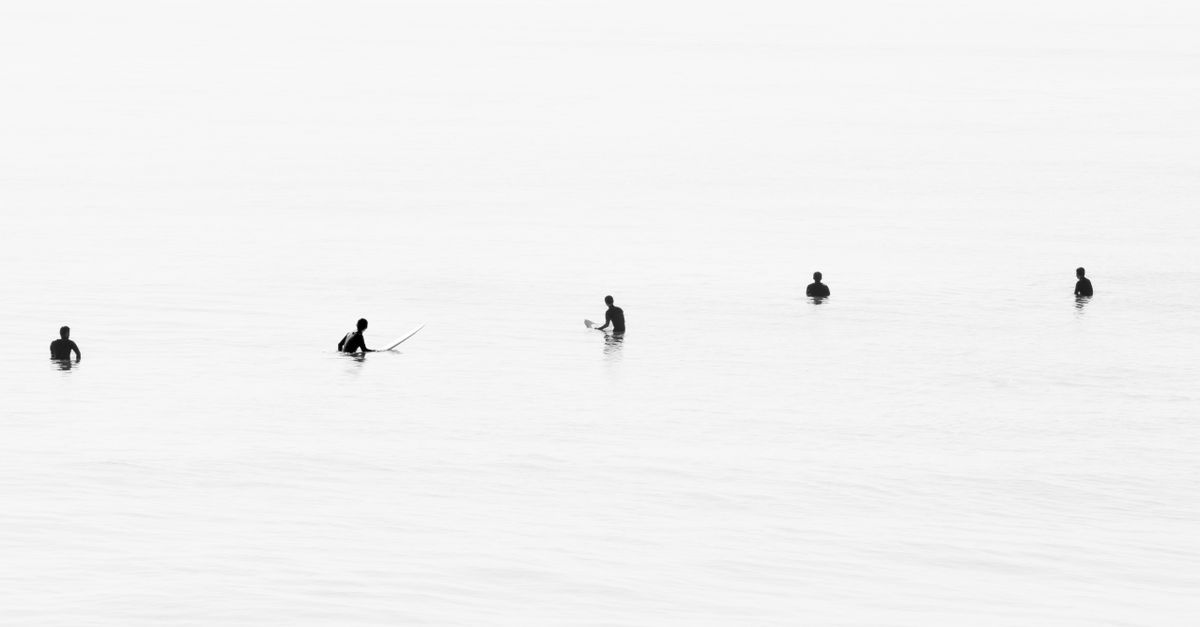
1. The right-of-way rule
This is the golden rule of surfing, for everyone's safety and not just out of politeness. The surfer closest to the peak (the point where the wave starts to break) has priority: they're the one who goes. The others wait for the next wave and don't "burn" their wave (drop in on them).
- If someone is already up and committed to the wave, you leave it to them: you don't take off in front of them.
- On an A-frame peak (a wave that breaks both ways), one surfer can go left and another right, each on their own side.
- Not respecting priority means risking a collision — one of the main causes of injury in the water, board and fins included.
2. The leash and your gear
The leash (the cord connecting your ankle to the board) is essential: it keeps you from losing your board after a fall and stops it from flying off and hurting another surfer or a swimmer. Check that it's in good condition (the attachment point and the velcro wear out) and matched to your board's length.
- Fins: check they're properly tightened before every session; their edges can cut.
- Foam board: less dangerous in a collision, it's still recommended for learning.
- The right wetsuit: in cold water, hypothermia is a real risk; a wetsuit of the right thickness is part of safety, not just comfort.
Always attach the leash before you go in and check your gear on dry land: a repair or adjustment happens on the beach, not in the waves.
3. The rip current
This is the main danger on sandy beaches. A rip current is a channel of water flowing back out to sea that can carry you away very fast, even if you're a strong swimmer. The vital rule: never fight the current head-on — you'd exhaust yourself in a few minutes.
- Stay calm and save your energy.
- Swim parallel to the beach to get out of the channel, which is often narrow, then head back to shore once you're free.
- On a board, you can let yourself be carried while holding onto your float: don't let go of it, it keeps you afloat.
- If you're in trouble, raise an arm and signal to the lifeguards; stay holding onto your board.
To spot a rip: a band of calmer, darker or more "churned-up" water streaming out to sea, between two areas where the waves are breaking normally. If in doubt, swim in a lifeguarded area and ask the lifeguards for advice.
4. Never surf alone
Even when experienced, you never surf alone. In case of injury, cramp, a hit from a board or a current, the presence of other people can change everything — and sometimes save a life.
- Tell someone close to you your spot and your time slot, especially outside lifeguarded areas.
- Preferably choose a busy or lifeguarded spot.
- Keep an eye on others in the water: surfing is also about collective awareness.
You don't force the sea: in a big swell, unusual conditions or when tired, stay near shore or give up. Knowing how to say no on a given day is a mark of experience, not weakness.
5. Knowing your limits and your surroundings
Many accidents come from a mismatch between the surfer's level and the day's conditions. Before going in, take an honest look at the situation.
| Situation | The right instinct |
|---|---|
| Sea bigger than usual | Stay near shore or give up; don't "test" it |
| Fatigue, cold, a cramp building | Get out of the water without waiting |
| A current carrying you away | Don't fight it; swim parallel to the beach |
| Rocky bottom / reef | Fall flat, protect your head, don't dive |
| Lots of people on the peak | Choose a less crowded peak, respect priority |
| Doubt about the spot | Watch for 10-15 min, ask locals or lifeguards |
Also note the obstacles (rocks, breakwaters, other water users), the water temperature and the tide times: a beach can be cut off by the incoming tide.
6. Falling and coming back up safely
The fall ("wipe-out") is part of surfing; handling it well avoids most injuries.
- Fall flat, never head or feet first, especially in shallow water: the sand or rock is close.
- Protect your head with your arms as you come up: your board, held by the leash, may be right above you.
- Come up carefully, one hand in front, and look around before your head breaks the surface.
- Under a big wave, stay relaxed for a few seconds and let it pass rather than struggling.
Never retrieve a board heading toward other people without making sure the way is clear.
7. Respecting the line-up and assessing conditions
The line-up (the area out back where you wait for waves) has its codes, which are first and foremost safety rules:
- Don't drop in on someone else's wave and don't paddle in front of someone already riding.
- When paddling out, go behind the surfer riding down the wave, never in front.
- Wait your turn, respect the locals, watch out for swimmers and beginners.
- Flag a danger you see (a swimmer in trouble, an obstacle): awareness is collective.
Before going in, assess the conditions: swell, period, wind, tide and wave size. BeachFinder shows this data for the spot, rated by the community, which helps you judge whether the session is reasonable for your level — and whether to give up when it isn't.