 BeachFinder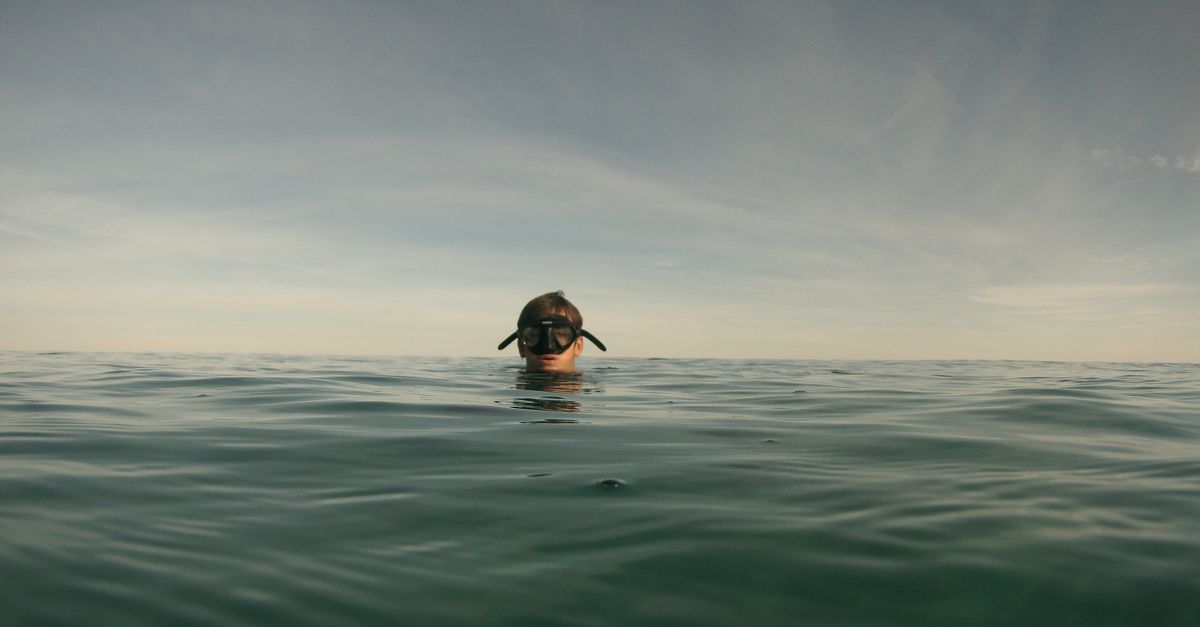
Never go out alone
The golden rule is the buddy system. In case of cramp, feeling faint, sudden fatigue or a current, someone nearby can help or raise the alarm. Stay within sight of each other, a few metres apart, and agree in advance on an area not to go beyond and a time to head back.
Also tell someone on shore about your outing, the area and the expected finish time: if something goes wrong, rescuers save precious time. A simple message before and after the outing is an effective safety net, especially at a remote spot.
Making yourself visible: the signal float
At the surface, a swimmer is very hard to spot from a boat: only the head shows, often hidden by the chop. A towed signal float (bright orange or red), attached to a belt, makes you visible from afar and serves as something to rest on.
It is a simple accessory that clearly improves safety, especially in areas used by boats. Some models double as a watertight compartment to stow keys and a phone. Do not rely on a boat "being supposed to" see you: make yourself visible actively.
Watching for boats and currents
- Stay clear of navigation channels, anchorages and harbour entrances.
- Before getting in, work out the current: swim against it first so you finish with it behind you on the way back, when you will be tired.
- Regularly take a landmark on the shore (a rock, a building) to detect drift before it grows too large.
- Beware of rip currents (baïnes) near ocean beaches, which pull out to sea.
- With an offshore wind, you are pushed out to sea without feeling it: be extra vigilant.
What to do in a current
If you feel yourself drifting or no longer making progress towards the shore, don't fight it head-on: it is exhausting and often a losing battle. Stay calm, breathe steadily and keep your float, which keeps you afloat and marks your position.
To get out of a rip current, swim parallel to the shore until you are clear of it, then head back in at an angle. If you are too tired, grab hold of the float, wave your arms wide and call for help. The priority is to float and conserve your strength, not to reach the beach at any cost.
Don't touch the wildlife or the bottom
For your safety and for the environment, look, don't touch. Some species sting, burn or injure: jellyfish, sea urchins, weever fish buried in the sand, scorpionfish with venomous spines, sharp coral. Contact also damages fragile habitats such as posidonia seagrass meadows.
Keep your distance, don't lift the rocks, don't put your feet down on the bottom and never feed the animals (it changes their behaviour and can make them aggressive). In case of a sea urchin or weever sting, rinse with seawater, remove any visible spines and, for a weever, apply heat; seek advice if the pain persists.
Sun, fatigue and cold
At the surface, your back, neck and the backs of your legs burn without you feeling it, cooled by the water: wear an anti-UV rash guard and water-resistant sunscreen on exposed areas. Drink before and after, because you dehydrate in the water too.
Watch for fatigue (the excitement makes you forget you are drifting away and overexerting) and cold: water draws heat away far faster than air, even in fine weather. Head back at the first shivers, a drop in alertness or the start of a cramp, before you are exhausted. Choosing a day when the sea is calm, as shown by the conditions rated in BeachFinder, also clearly reduces the risk.
Special cases: children, freediving, health
With children, stay within arm's reach, fit them with a life jacket or a flotation float, limit the time and watch for cold, which reaches them faster. Never leave them alone, even in shallow water.
If you freedive down to see more closely, never do it alone and come back up well before you need air: hypoxic blackout can strike without warning, often near the surface. Finally, if you have a heart, breathing or ear condition, seek medical advice: cold water and exertion tax the body more than you might think.